

Customer Service
Share your contact information – our engineers respond 24/7.
When it comes to mattress border production, pattern choice gets most of the attention. But the materials beneath the surface matter just as much. The wrong fabric combination can undermine even the most well-designed pattern — producing a border that looks flat, feels cheap or fails to bond correctly during production.
For manufacturers using ultrasonic quilting machines, material selection is not just an aesthetic decision. It directly affects whether the bonding process works at all. Understanding what works, what does not and why gives manufacturers and brand buyers a significant advantage when specifying a new border construction.
A mattress border serves three functions simultaneously. It needs to look good on the showroom floor, feel substantial to the touch and perform consistently across a full production run. A material combination that satisfies all three requirements is the foundation of a successful border specification.
Traditional needle-and-thread quilting is relatively forgiving with materials — if a needle can pass through it, it can generally be quilted. Ultrasonic bonding works on an entirely different principle. High-frequency vibration generates heat at the molecular level, fusing synthetic fibers together permanently without thread.
This means material selection is not just a preference — it is a technical requirement. The right materials produce clean, durable bonds with sharp pattern definition. The wrong materials simply will not bond effectively, regardless of machine settings.
A standard ultrasonic quilted mattress border consists of three layers: the top layer fabric, the fill layer and the bottom fabric. Each layer plays a distinct role in the finished product.
The top layer is the most visible layer — the one your customer sees and touches first. For ultrasonic quilting, knit fabric is the standard choice for the outer face layer, and for good reason.
Knit fabrics have inherent stretch and recovery, which allows them to conform cleanly to the raised pattern geometry during the bonding process. This is what produces the sharp, well-defined pattern edges and strong 3D relief that ultrasonic quilting is known for.
The critical material requirement for the face fabric is synthetic fiber content. For ultrasonic bonding to work effectively, the face fabric must contain more than 30% synthetic fiber — polyester being the most common. The heat generated during bonding needs synthetic fibers present in sufficient quantity to fuse properly.
All-cotton fabrics are not suitable for ultrasonic quilting. Cotton fibers do not respond to ultrasonic energy in the same way synthetic fibers do, and will not bond reliably. Manufacturers currently using cotton-rich face fabrics will need to transition to a synthetic blend before switching to ultrasonic production.
The fill layer sits between the face fabric and the backing, and is responsible for the loft, volume and tactile feel of the finished border. For ultrasonic quilting, there are three main fill options:
Polyester fiber is the most commonly used fill material. It is lightweight, consistent and bonds well within an ultrasonic construction. Polyester fiber fill is well suited to both flat-profile and moderate-loft pattern designs.
Foam or sponge adds significant volume and a firmer, more cushioned feel to the finished border. Foam fill is particularly effective with high-loft patterns such as Puffed Diamond, Cushion Square and Basket Weave, where substantial material depth is needed to achieve the full visual effect of the raised pattern.
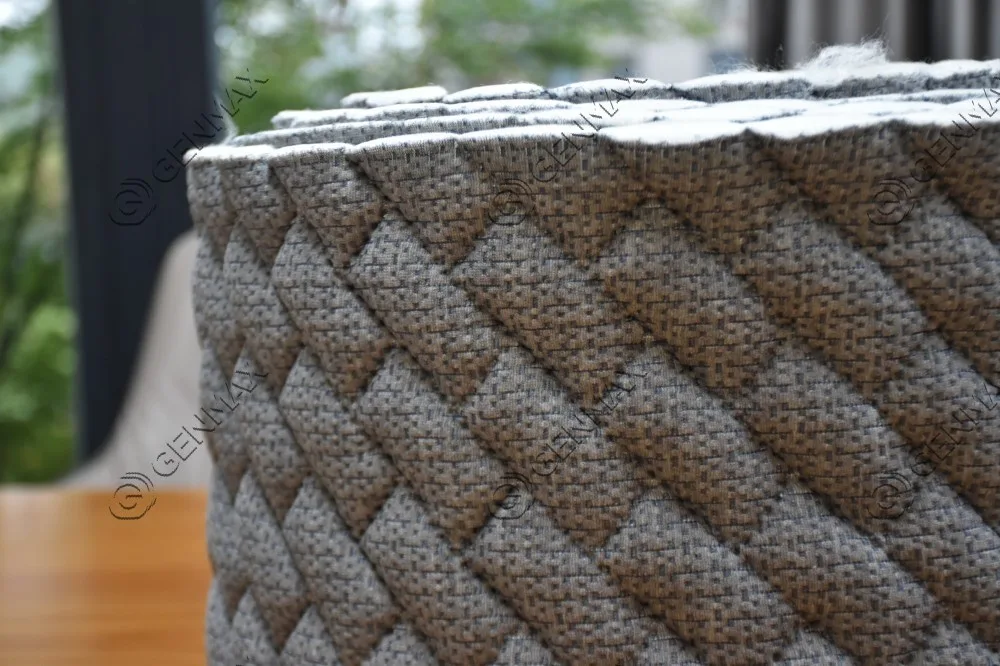
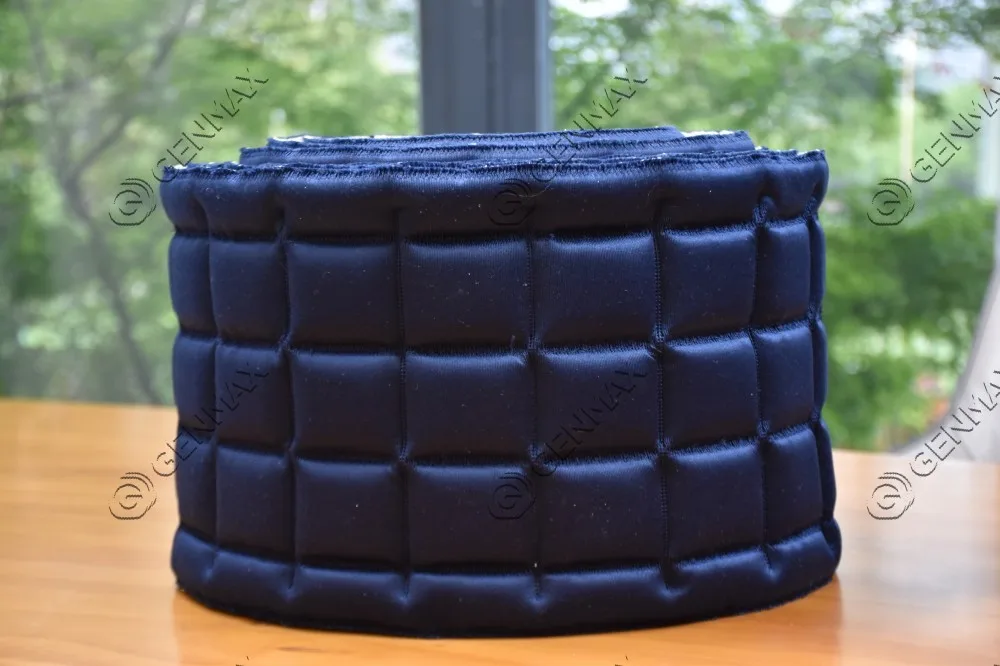
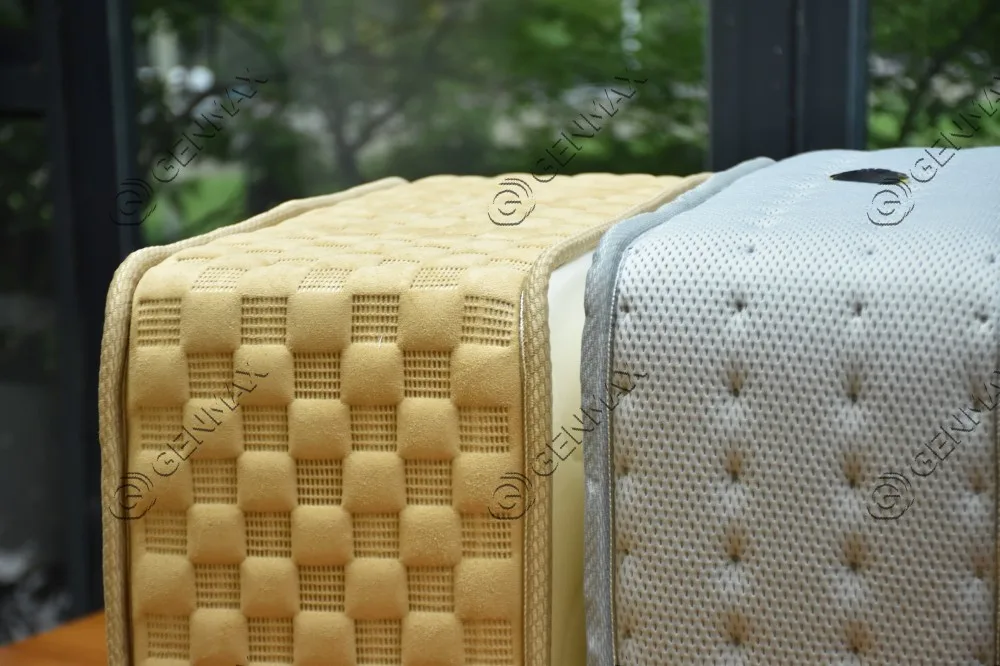
A combination of fiber and foam is also a valid construction. Layering both materials allows manufacturers to tune the feel and appearance of the border more precisely — using foam for volume and fiber for softness, for example.
The right fill specification depends on your pattern choice, your target price point and your production setup. Because fill configuration has a direct impact on bonding performance and finished border quality, we recommend discussing your specific fill requirements with our sales team before finalising your border construction.
The backing layer is the innermost layer of the border construction — the side that faces the mattress interior. For ultrasonic quilting, both nonwoven fabric and knit fabric are suitable backing options.
The choice between the two is determined primarily by the requirements of your finished product and personal preference. Nonwoven backings tend to offer a cleaner, more stable surface, while knit backings provide additional stretch and flexibility. Neither option presents a technical barrier to ultrasonic bonding — both work effectively within a correctly specified construction.
Across all layers, the single most important material consideration for ultrasonic quilting is synthetic fiber content. This applies primarily to the face fabric, where a minimum of 30% synthetic fiber is required for reliable bonding.
This is not a guideline — it is a production requirement. Face fabrics that fall below this threshold will produce inconsistent bonds, weak pattern definition and potential delamination over time. Before specifying any new face fabric for ultrasonic border production, always confirm the synthetic fiber composition with your fabric supplier.
Based on the above, a well-specified ultrasonic mattress border construction follows this general structure:
This construction gives you the material foundation for reliable bonding, consistent pattern definition and a finished border that performs well across a full production run.
Material specification for ultrasonic quilting depends on a combination of factors — your pattern choice, your target market, your existing fabric suppliers and your production volume. There is no single correct answer that applies to every manufacturer.
Our sales team works with mattress manufacturers and brand buyers at every stage of the material selection process — from initial fabric assessment through to full production trials. If you are specifying a new border construction or evaluating whether your current materials are compatible with ultrasonic quilting, contact our sales team to discuss your specific requirements.