

Customer Service
Share your contact information – our engineers respond 24/7.
There are two main processes used to produce quilted mattress borders today: ultrasonic quilting and multi-needle quilting. Both are widely used in mattress manufacturing. Both produce a quilted surface pattern. But the way each process works — and what it produces — is different in ways that matter to manufacturers and brand buyers.
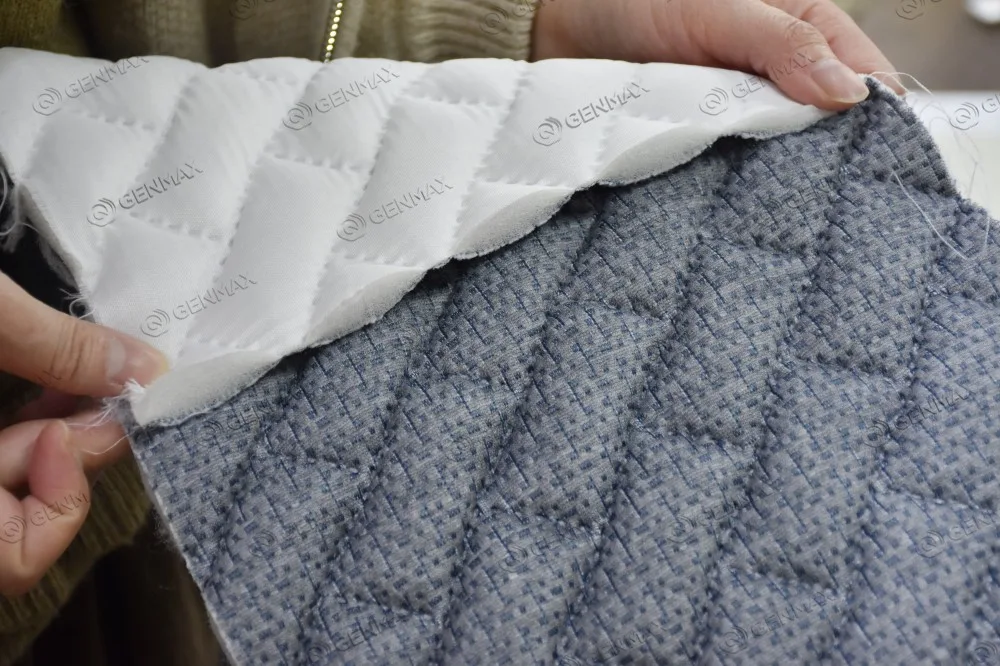
Multi-needle quilting is the traditional method of mattress border production. A bank of needles passes thread through multiple fabric layers simultaneously, stitching a repeating pattern across the full width of the border panel. The pattern is defined by the stitch path of the needles.
Thread is a fundamental part of the construction. It holds the layers together, defines the pattern outline and is visible on both the face and reverse of the finished border.
Ultrasonic quilting uses high-frequency vibration instead of thread. A precision-engraved pattern roller presses the fabric layers together, generating heat at the molecular level that fuses synthetic fibers permanently. No thread passes through the fabric at any point.
The pattern is determined entirely by the roller design. The bond is created within the fabric layers themselves rather than by an external thread running through them.
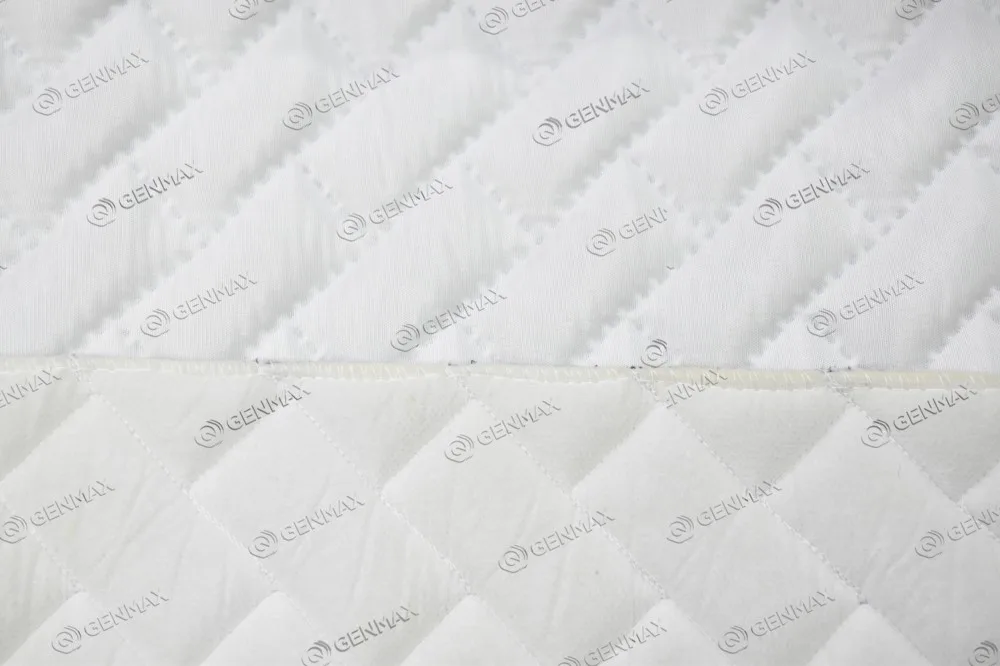
The images below show the same diamond pattern produced by each method. Both samples use the same fabric type and fill construction. The only variable is the quilting process.
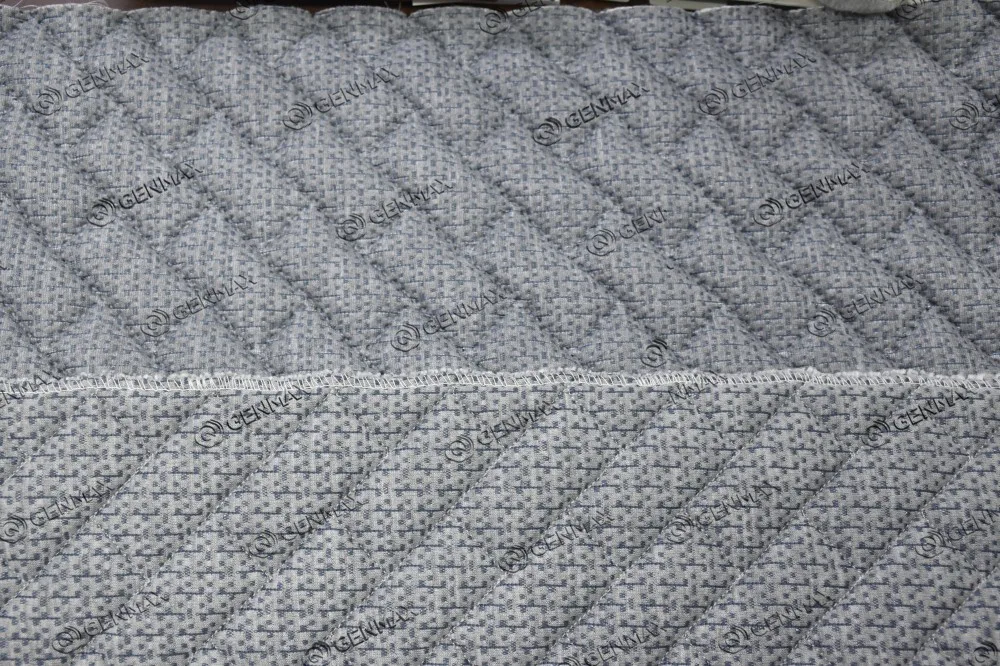
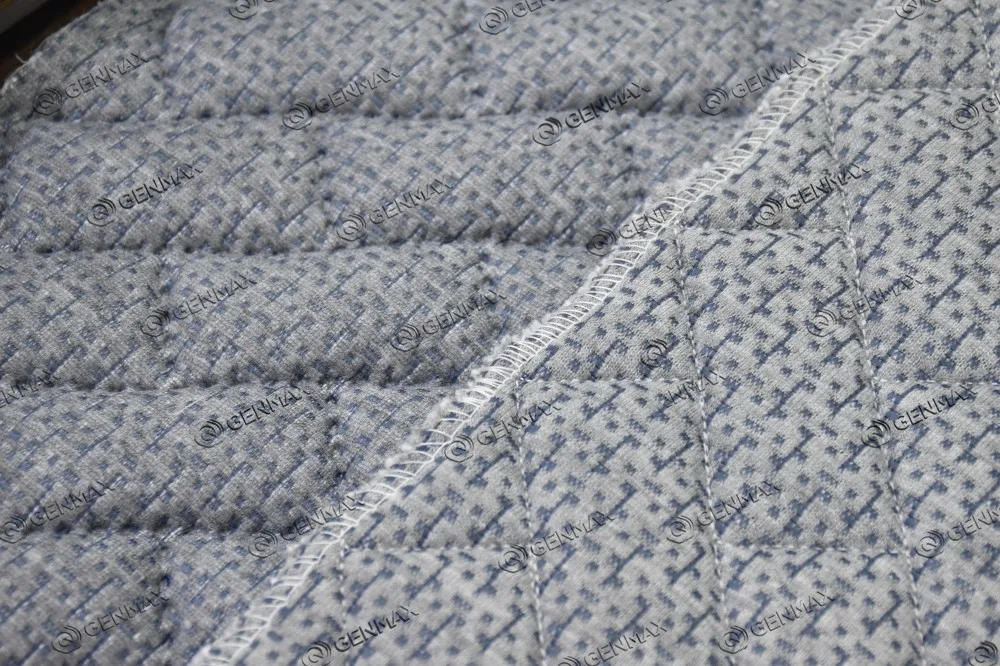
Multi-needle quilting is a mature, well-understood technology with decades of use in mattress manufacturing. Its characteristics — visible thread, potential fraying at edges, pattern softness — are well known and accounted for in traditional border construction and finishing.
Ultrasonic quilting produces different characteristics — sealed edges, no visible thread, sharper pattern definition — because it works on a fundamentally different principle. The bond is formed within the fiber layers rather than by thread passing through them.
For manufacturers and brand buyers, the question is not which process is better in absolute terms. The question is which process produces the result that best serves your product, your market and your production requirements.
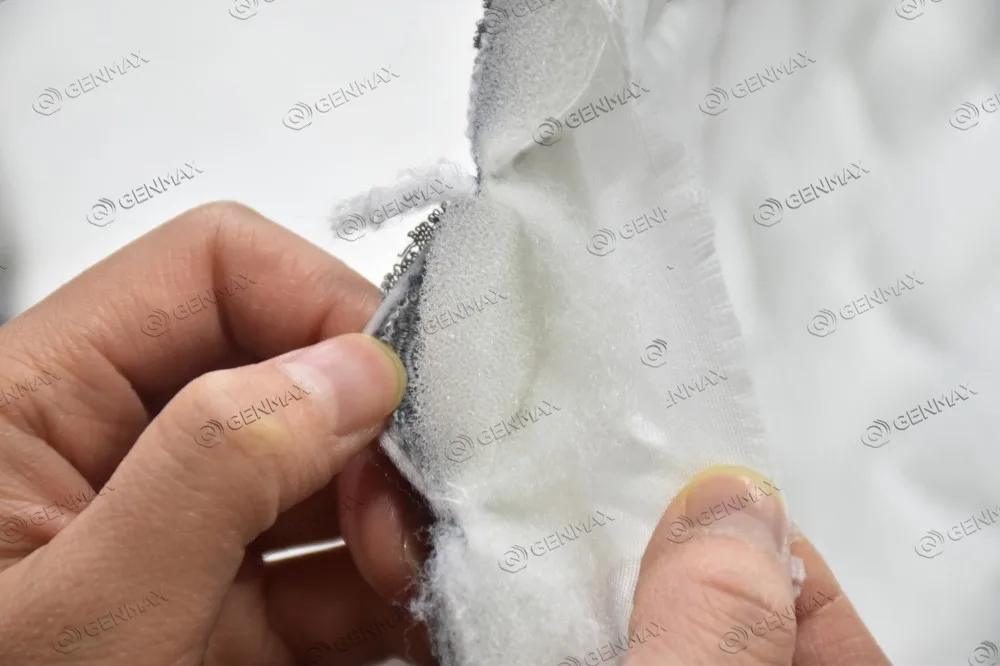
If the characteristics shown in this comparison are relevant to your mattress border specification — or if you are evaluating a new border construction for an upcoming mattress range — our sales team can provide detailed information on ultrasonic quilting machine options, material compatibility and pattern availability.
Every pattern shown in our 2026 border collection is produced by ultrasonic quilting machine and available for production trials.
Contact our sales team to discuss your specific requirements.